Biodiversity Conservation & Native Plant Propagation
Introduction: Restoring Life Through Native Plants
Biodiversity conservation begins with the simple act of planting the right species in the right place.
Native plants form the foundation of healthy ecosystems — they support pollinators, birds, butterflies, and soil organisms that sustain life.
Through native plant propagation and ecological restoration, we can rebuild natural habitats, prevent soil erosion, and create self-sustaining landscapes.
As an environmental activist and nature educator, Anish Nellickal promotes the use of native species, wild flora, and indigenous tree varieties in reforestation and home gardens across Kerala and India.
Why Native Plant Propagation Matters
- Supports Local Ecosystems: Native plants provide food and shelter for local insects, birds, and pollinators.
- Restores Ecological Balance: Propagating native trees helps rebuild forests, wetlands, and butterfly habitats.
- Conserves Water & Soil: Native species are naturally adapted to local climate, reducing irrigation and fertilizer needs.
- Preserves Genetic Diversity: Propagation ensures the survival of rare, endangered, and region-specific plant varieties.
1. Seed Propagation:
Seeds are collected from mature native trees and herbs, cleaned, and sown in natural growing media.
This method maintains genetic diversity and supports large-scale restoration efforts such as Miyawaki forests and butterfly gardens.
Advantages:
● Cost-effective and natural
● Encourages adaptation to local ecosystems
Note: Some seeds require dormancy-breaking techniques such as soaking, scarification, or cold treatment.
2. Cutting Propagation:
Cuttings from healthy parent plants (stem, leaf, or root) are rooted in organic media to produce new plants identical to the original.
It’s widely used in aromatic, medicinal, and ornamental native species.
Advantages:
● Retains the exact genetic traits of the parent
● Faster than seed propagation
3. Division:
Plants with multiple shoots, bulbs, or clumps are divided to create new individuals.
This eco-friendly technique is useful for medicinal herbs, grasses, and perennial ground covers in biodiversity parks and sensory gardens.
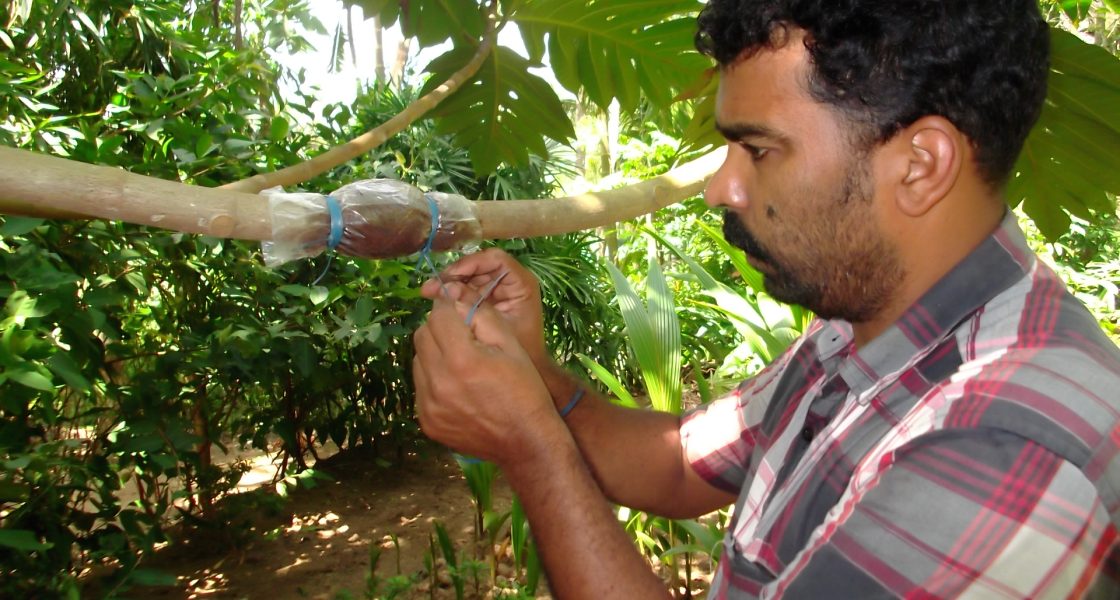
4. Layering:
In this method, a branch of a native plant is bent down, covered with soil, and allowed to root naturally.
Once established, it is separated to become an independent plant.
Advantages:
● Ideal for species with flexible stems
● Produces strong, well-rooted offspring
5. Grafting:
Grafting combines two compatible plant species to enhance disease resistance and adaptability.
This is particularly valuable for conserving native fruit tree species and improving resilience in changing climatic conditions.
6. Tissue Culture (Micropropagation)
A modern propagation method used to multiply native and rare species in a controlled environment.
It supports mass propagation, disease-free production, and reforestation projects.
Biodiversity Restoration Through Native Plants
Anish Nellickal’s mission extends beyond gardening — it’s about reconnecting people with their ecosystem.
His initiatives promote:
● Miyawaki forest creation using 100% native trees
● Butterfly and sensory garden design for biodiversity awareness
● Tree rejuvenation and transplantation for urban green conservation
● School and community eco-awareness programs
By reviving native species and traditional plant knowledge, biodiversity can thrive again — in backyards, villages, and cities alike.
Join the Movement
You can be part of this conservation effort by planting native trees, protecting local habitats, and sharing knowledge about ecological restoration.
Together, we can heal the planet one native plant at a time.